










































Deploio (PaaS) · the fully managed app platform

git push. Live in a few minutes. Hosted in Switzerland.

Every git push builds and releases your app automatically. Deploio rolls out new instances and replaces the running ones. No Kubernetes, no YAML required, no infrastructure stress. Hosted and developed in Switzerland.

from CHF 8.75 per month Live in a few minutes 100% Swiss-owned ISO 27001 & 9001 No lock-in
Jump to
Use cases

Sound familiar?

“We want to ship apps without managing Kubernetes.”

How Deploio helps

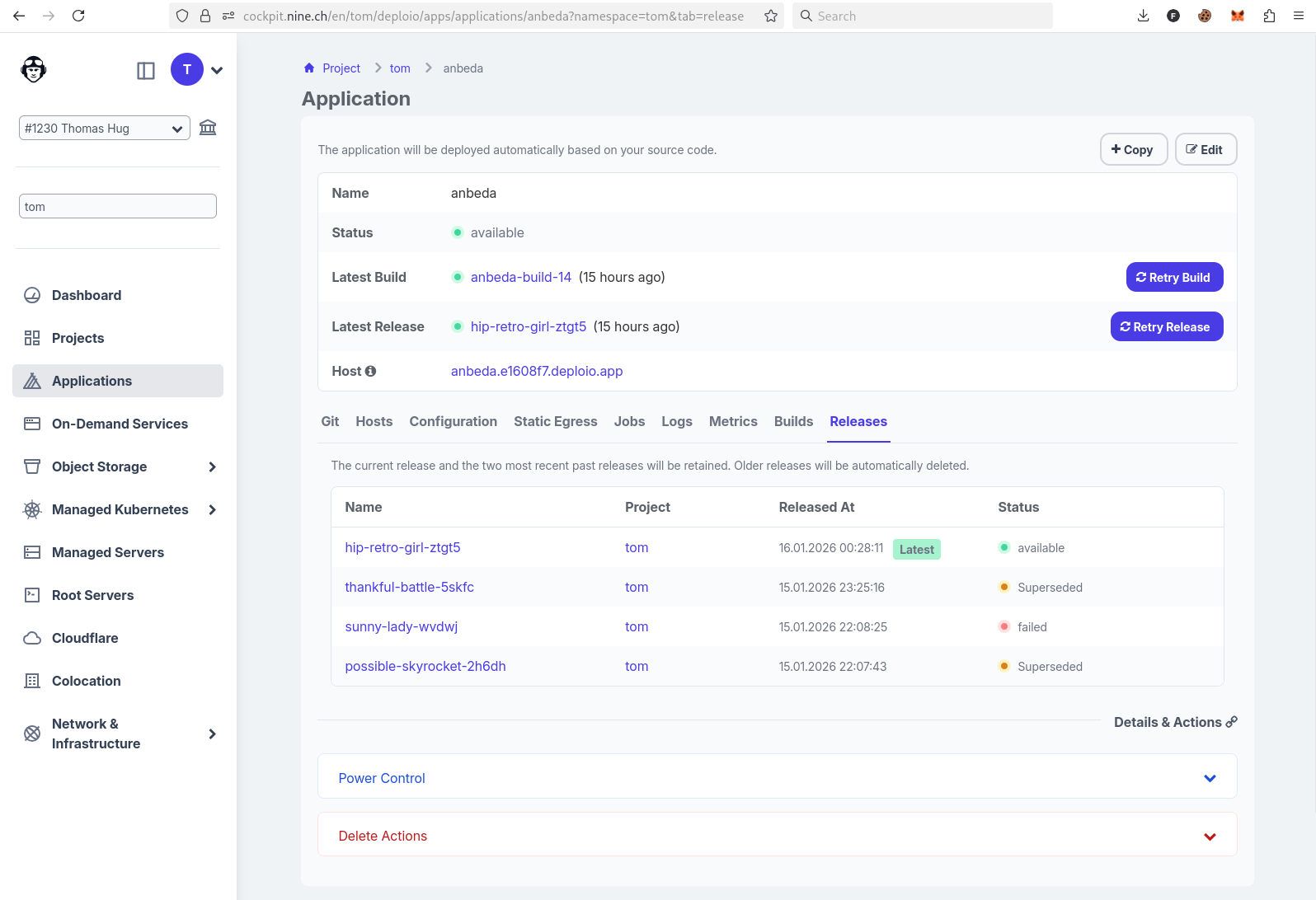
A git push is all it takes: build phase, release phase, TLS certificates and logs are handled for you. New releases go live in a few minutes. Deploio starts new instances and then replaces the running ones.


“Heroku and the like are too expensive and too far away for us.”

How Deploio helps

The Swiss alternative, with a real contact person instead of just a ticket system, the Deploio Community Slack and per-minute billing.

“New features need to go live faster.”

How Deploio helps

Run migrations before each release with Deploy Jobs, background work with Worker Jobs and recurring tasks with Scheduled Jobs. Need a second environment? Copy an app with nctl.

“Our data has to stay local and compliant.”

How Deploio helps

100% of your data in Switzerland and under Swiss law, run by an ISO-certified Swiss provider.

All included

Bring us your code, we do the rest

Your language

Ruby, PHP, Node.js, Go and Python detected automatically, static sites with the language set once, or your own Dockerfile.

Database & storage

On-Demand PostgreSQL, MySQL, Key-Value Store and OpenSearch, plus S3-compatible Object Storage for your files (the app filesystem is ephemeral). Service Connections (beta) inject the credentials as environment variables.

Logs and metrics

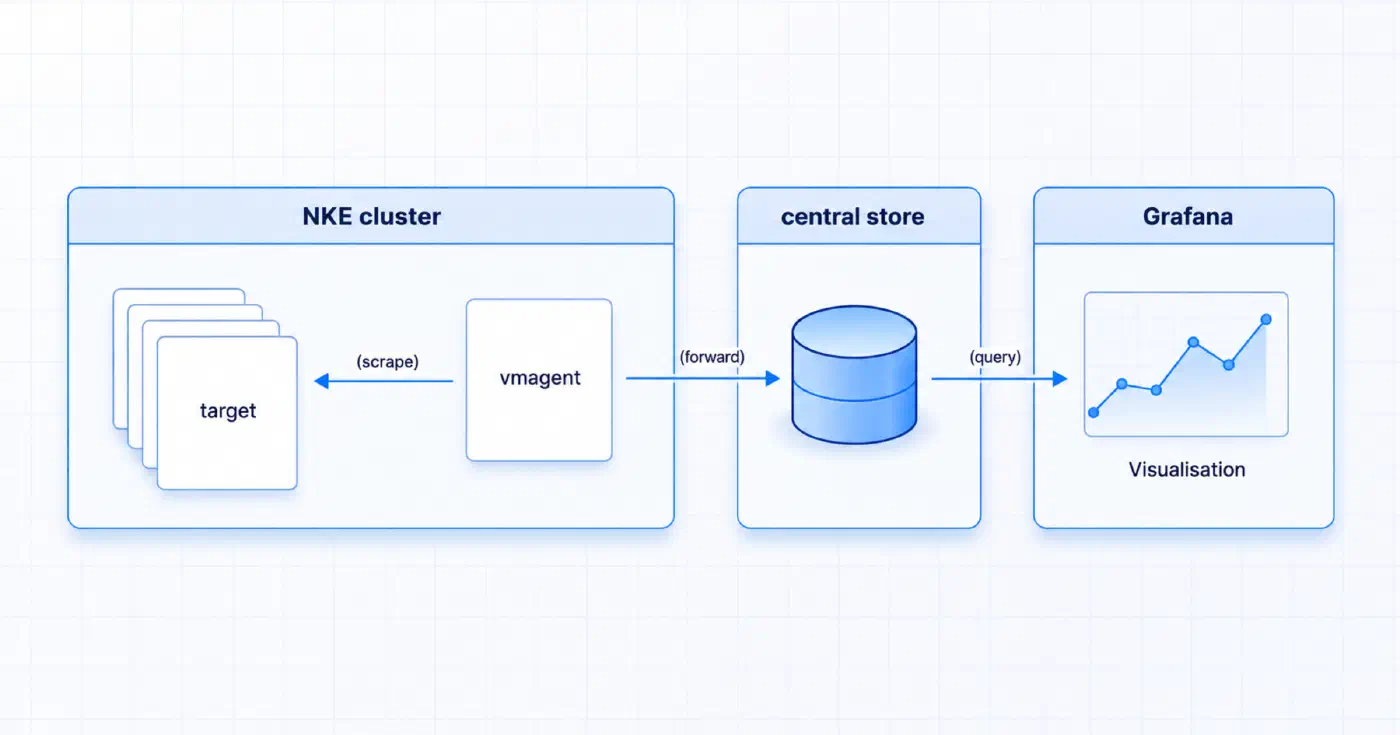
Logs are kept for 30 days. Cockpit shows basic application metrics. For detailed metrics, add a Grafana instance. Observing your app.

Jobs built in

Deploy Jobs before each release, up to 3 Worker Jobs (e.g. Sidekiq) and Scheduled Jobs with cron syntax and time zone.

Your domains

Up to 50 Custom Host Names with automatic Let’s Encrypt certificates. Basic authentication if you need it.

Work your way

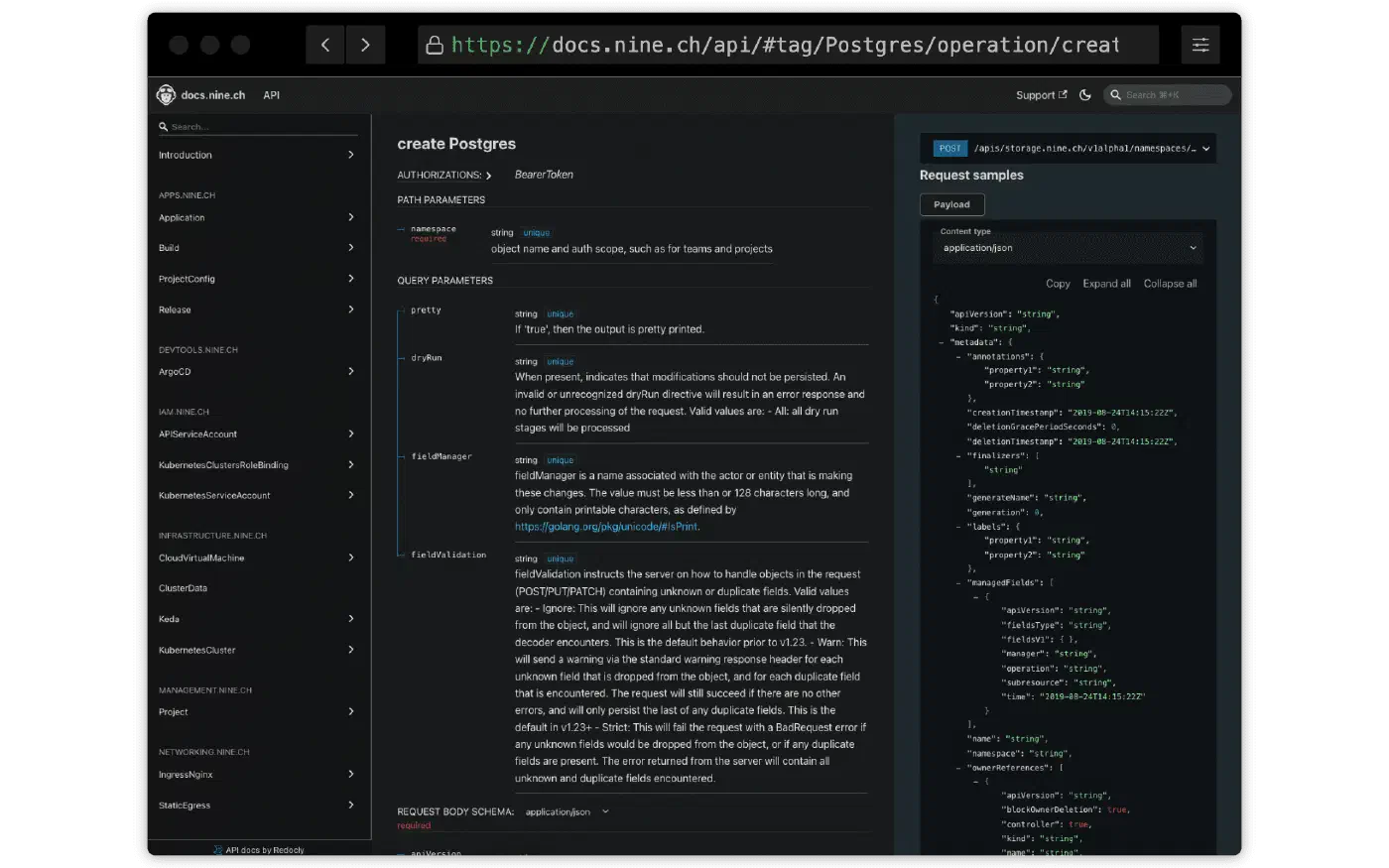
Cockpit, nctl or API. Private repositories from any Git host, over SSH or HTTPS.

No lock-in

Unchanged Heroku Cloud Native Buildpacks by default, Paketo as an alternative, or your own Dockerfile.

Pause when idle

Pause an app to stop it and its jobs, and resume it when you need it again. Connected services such as databases keep running and are billed.

How it works

From git push to a live app

  1. 01

    Connect your repo

    In Cockpit, with nctl or the API. Private repositories over SSH or HTTPS.

  2. 02

    Build

    With the matching buildpack or your own Dockerfile.

  3. 03

    Release

    Deploy Jobs run first, then new instances replace the running ones.

  4. 04

    Run

    Logs, metrics and sizes in Cockpit. Pause the app when you don’t need it.

Pricing

What does Deploio cost?

mini (512 MiB RAM, 0.25 CPU) CHF 17.50
standard-1 (1 GiB RAM, 0.5 CPU) CHF 35.–
standard-2 (2 GiB RAM, 0.75 CPU) CHF 63.50
standard-4 (4 GiB RAM, 1.5 CPU) CHF 127.–

All prices per month, billed by the minute for actual usage. Size micro (256 MiB RAM, 0.125 CPU) without a database is ideal for testing on a small non-production instance. Add-ons are priced separately: On-Demand databases from CHF 5.50, Key-Value Store from CHF 5.58, Static Egress (fixed outbound IP) CHF 16.–. Full, up-to-date pricing in the Price Calculator.

Trust

What customers say

«Cloud yes, but preferably in Switzerland from a Swiss company with capable engineers who take you seriously – with Nine we found that.»
Josua SchmidCTO
«We've been building Kubernetes platforms for our clients for years. For Keera, we didn't want to do that. We wanted to focus on the product. With Deploio and Nine, we push the code and it runs, in Switzerland and without the CLOUD Act.»
Lena FuhrimannFounder
«Our mission is digital democracy, not server management. With Deploio's PaaS solution, we don't have to worry about the infrastructure at all.»
Fabian LigibelStrategie & Produkt
«The migration of the Salary Survey succeeded in early 2025 and has proven that digital sovereignty is achievable. For swissICT, it required a deliberate decision to take the secure path with local partner companies.»
Cornelia AmmonProduct Managerin ICT-Salärstudie
FAQ

Frequently asked questions

Which programming languages are supported?
Ruby, PHP, Node.js, Go and Python are detected automatically from your repo and built with the matching buildpack. For static sites you set the language once. If your language isn’t supported, bring your own Dockerfile instead.
How does billing work?
Deploio is billed by the minute for actual usage, depending on the size you choose (micro, mini, standard-1, standard-2 or standard-4). A paused app costs nothing itself, connected services such as databases keep running and are billed. Full breakdown in the Price Calculator.
What happens when I push to Git?
Deploio builds your app with the matching buildpack or your Dockerfile, runs your Deploy Jobs and then rolls out new instances that replace the running ones.
How does my app scale?
Horizontally: you set the number of instances (replicas), for example with nctl update app --replicas. Each instance is billed at its size. For more power per instance, choose a larger size, for example standard-2 instead of standard-1. There is no automatic scaling.
Where do I store uploads and other files?
In Object Storage or a database. Your app’s filesystem is ephemeral (2 GiB at most) and is emptied with every release and restart. Files you want to keep belong in S3-compatible Object Storage or in a database.
How do I connect a database?
With Service Connections (beta), Deploio injects the credentials of On-Demand MySQL, PostgreSQL, Key-Value Store or OpenSearch as environment variables into your app.
Where is my data hosted?
Your data is stored 100% in Switzerland and is subject to Swiss law. Deploio runs on our ISO 27001 and ISO 9001 certified infrastructure.
How does Deploio compare to Heroku?
Deploio offers the same git push workflow as Heroku and builds with unchanged Heroku Cloud Native Buildpacks by default, but runs on Swiss infrastructure instead of US data centres. How Renuo made the move: Renuo AG: from Heroku to Deploio.
Where can I get help if I’m stuck?
For quick questions, join the Deploio Community on Slack. For anything else, open a support ticket at any time.
What if my project outgrows Deploio?
If you need a specific stack, full server access or want to run many services or teams on Kubernetes, we offer that too: Managed Kubernetes, including cost-efficient vClusters, and Managed Server.

Technical questions? You’ll find the details in the documentation.

One provider

One provider, from rack to app.

From colocation to Root and Managed Products, platforms and services: all with us, in our Swiss data centres. Grow from one layer to the next without switching providers. The highlighted layer is this page.

One Swiss teamGrow without switching providers

Your first app in a few clicks.

Start small, pay by the minute, grow when you need to.

Talk to Our Experts

Do you have questions about our products? No problem. Contact our sales department or go directly to your Cockpit to see all the possibilities at Nine.

Subscribe to Our Newsletter for the Latest Updates: